
Join us live on May 27, 2026 @ 10am PT / 11am MT / 12pm CT / 1pm ET
Developing a Discipleship Pathway
Build Disciples. Not Just Attendees.
Practical training for pastors who are ready to stop borrowing someone else’s discipleship model and start building one that actually fits their church.
Complete the form below to register for free
If you’ve been a leader in ministry any amount of time you know there is one question that quietly follows you around: Are we actually making disciples?
You track attendance. You watch your group ratio. You count baptisms, monitor first-steps completion, look at giving per household. The dashboard tells you the church is healthy.
But somewhere underneath the metrics is the real question. What’s happening in the hearts of people? Are they becoming more like Jesus, or just becoming more familiar with your church?
“Pathway” is the phrase everyone uses. But discipleship isn’t linear. People don’t move through your church like cars on a one-way road. They circle back. They get stuck. They grow in seasons. The pastors who try to engineer a tidy progression end up frustrated that real people don’t cooperate with the diagram.
What you actually need is a framework (how your church makes disciples) paired with a vision (what a disciple actually looks like when your church has done its work).
Many churches have one without the other. The ones that have both stop reinventing the wheel every 12 months.
What’s Covered In This Training Day
In this Training Day we unpack a discipleship approach built over years of implementation, refined through what works and what doesn’t with real people in a real church.
The difference between a discipleship framework and a discipleship vision, and why you need both
A simple model for explaining your approach so new people can get on board fast (without needing a four-week class to understand it)
The “highway with rest stops” mental model and why it works better than a linear pathway
How to articulate what a disciple is at your church, grounded in the person, work, path and power of Jesus
The role individual believers play in their own growth, and what your church is actually responsible for.
Four Discipleship Beliefs Worth Reconsidering
A few assumptions quietly limit most discipleship efforts. We’ll name them and offer a better way to think about each:
That discipleship is linear. You build systems assuming forward motion and become frustrated when people don’t progress on your timeline.
That discipleship is “advanced Christianity” for the already-commited. Discipleship becomes a side door for the few who ‘show interest’ instead of a front door for everyone.
That discipleship is one ministry of the church, rather than the whole ministry of the church. You hand discipleship to a staff member, fund it as a line item, and let the rest of the church off the hook.
That spiritual maturity follows the timeline we’d design for it. You measure the wrong people at the wrong moments, missing the slow, hidden work actually forming them.
Most discipleship resources hand you a structure — a funnel, a pathway, a set of stages. You bring it home, try to retrofit it in your church, either modify it beyond recognition or quietly shelve it.
It’s not that the structures are wrong. It’s that a borrowed structure without your own vision underneath it doesn’t hold. You can’t run someone else’s framework on your church’s theology, your community’s culture, and your staff’s capacity — at least not for long.
This Training Day works the other direction. It helps you clarify the vision first, then build (or sharpen) the framework that actually fits your church.
You’re likely closer than you think. The pieces are probably already there. They just need the connective tissue.
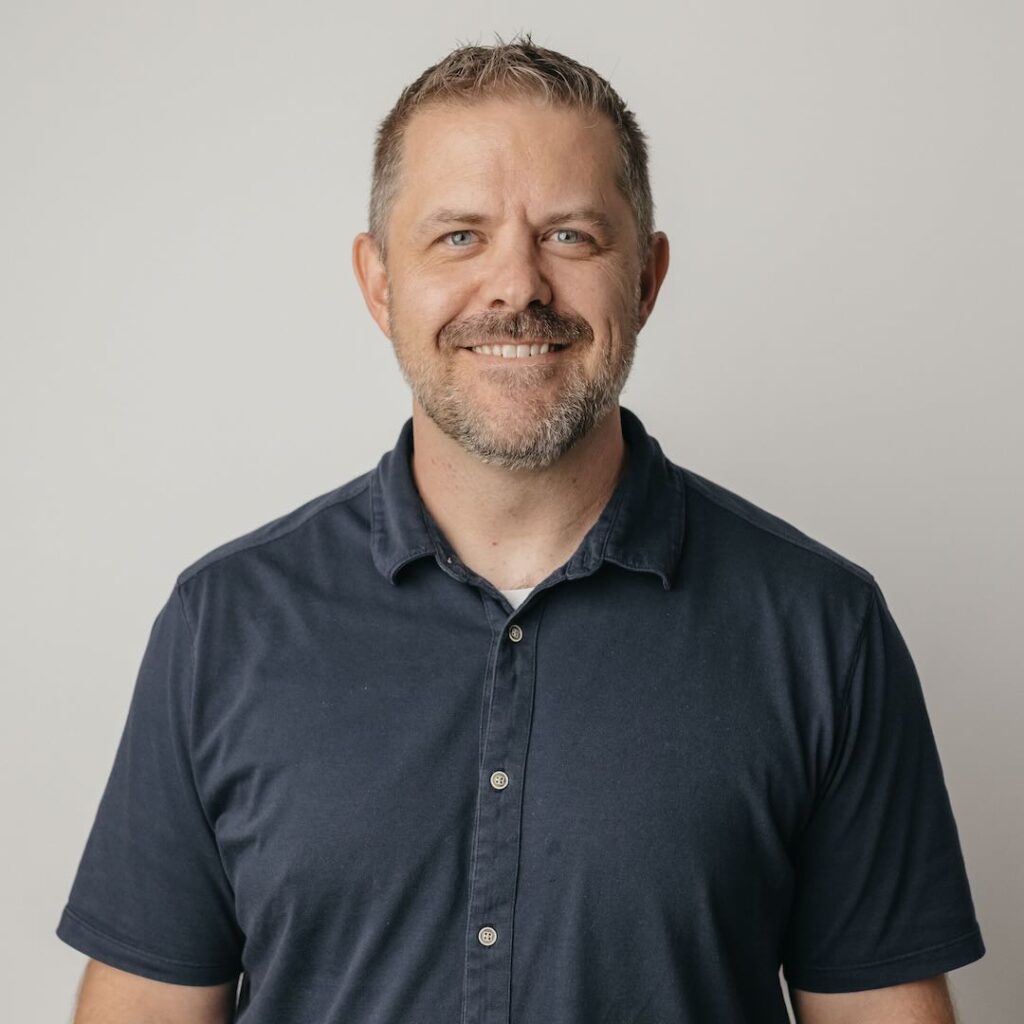
Luke Simmons
Lead Pastor, Ironwood Church
faithfulandfruitful.com
Luke Simmons is the Lead Pastor of Ironwood Church in Arizona, a church he planted in 2009. He has experience coaching leaders, church planters, and pastors. Luke is certified with CoachNet and Gospel Coach. He has a B.S. in Speech Communication from the University of Illinois and a Master’s Degree from Covenant Theological Seminary.
Free Online Ministry Training